

Quick Insight: Boosting Patient Referrals Through Field MarketingField marketing increases referrals for healthcare practices by building direct, trust-based relationships with physicians and referral partners through consistent, personalized outreach. By simplifying referral processes, communicating clear clinical value, and using data-driven insights, practices can strengthen networks and drive more consistent patient referrals. It adds a human, relationship-focused layer that complements traditional marketing efforts and improves long-term growth. |
What Is Field Marketing in Healthcare?
Before going further, it helps to understand what field marketing actually involves and how it differs from other patient acquisition approaches.
Definition and Scope of Field Marketing
Field marketing in healthcare means sending trained representatives known as physician liaisons or referral specialists to personally connect with doctors, clinics, and community groups. Their core objective is to always establish and strengthen referral relationships, communicate new services and access improvements, and gather feedback to boost patient experience and referral workflows.
Its scope typically includes relationship building, service promotion, competitor intelligence, event hosting, and local community engagement. Field marketing for healthcare practices makes sure your organization remains visible, accessible, and well-positioned within a referral network.
Distinguishing Field Marketing from Other Marketing Strategies
Unlike digital marketing, branding, or patient-facing advertising, field marketing is:
- Highly personalized: It allows for face-to-face interactions that build trust and loyalty faster.
- Relationship-driven: In field marketing, success is measured by referral patterns and satisfaction of partner providers.
- Operationally informed: Every representative responds to real-time issues like scheduling delays or communication gaps in field marketing.
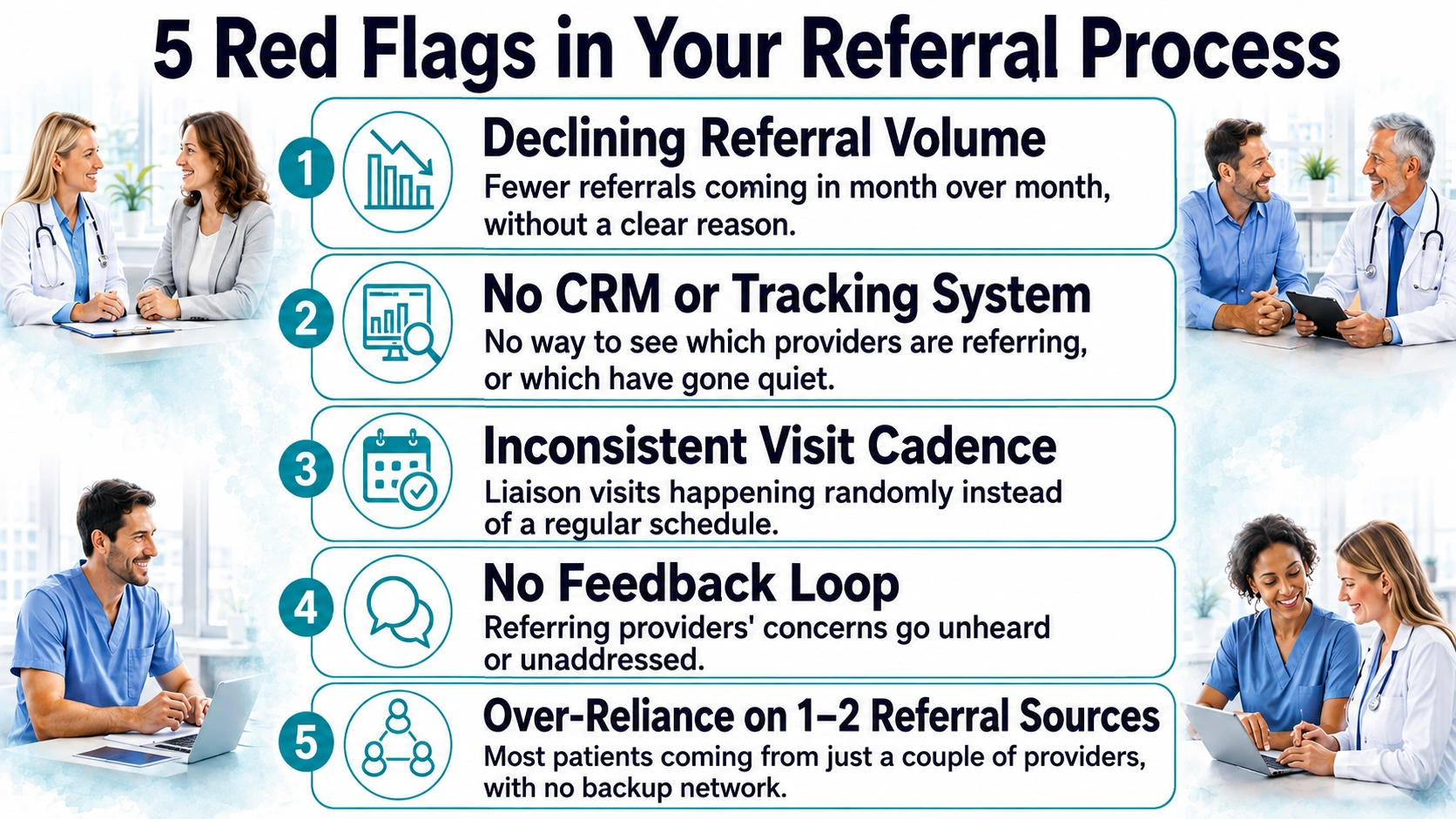
Signs Your Referral Process May Be Falling Behind
Not every drop in referrals is obvious right away; often it shows up gradually through smaller warning signs. Recognizing these signs early gives your practice time to course-correct before referral volume takes a real hit.
How to Increase Referrals With Field Marketing Services
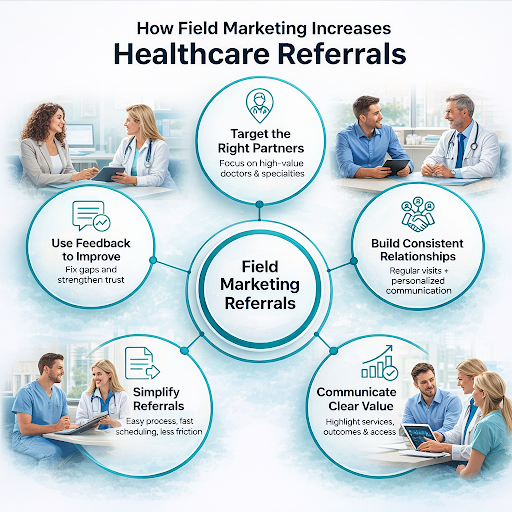
Field marketing strategies for healthcare follow a structured and data-driven approach that continuously develops referral channels. The following strategies deliver the strongest referral outcomes:
Identify and Target the Right Referral Partners
Not all doctors contribute equally to referral generations. By using data and location maps, healthcare practices can find which doctors or clinics are most likely to refer patients, which areas need more outreach, and which specialties match their services best. Focusing on these high-potential partners helps make every visit and effort more effective.
Develop Consistent Visit Cadence and Relationship Plans
A systematic visit schedule, such as weekly, biweekly, or monthly, keeps the practice top of mind. During these visits, it’s important to personalize your conversations. For example, if you’re meeting with an orthopedic surgeon, focus on how your physical therapy services can support their patients. This kind of specific communication builds stronger relationships. A 2025 systematic review found that breakdowns in regular communication between referring physicians and specialists are among the most common barriers in referral systems [Health Science Reports, PMC] [1]. Therefore, making consistent, structured visits is not just a marketing strategy, but a clinical necessity.
Communicate Value with Clear Clinical Differentiators
Field marketing representatives should clearly explain what makes their practice stand out. By highlighting the expertise, any new services or advanced technologies you offer, shorter wait times for patients, or compatibility with various insurance plans. It’s also helpful to mention if you provide a direct contact line for urgent referral cases. Sharing real data and patient outcomes adds credibility and helps referral partners see the true value of working with your practice.
Simplify Referral Workflows for Providers’ Convenience
Doctors are often too busy to handle complex referral processes, and the consequences of that friction are well-documented. Research shows that approximately 30–50% of outpatient specialty referrals are never completed successfully, largely due to excessive paperwork, communication gaps, and poor information handoff [International Journal of Medical Informatics, PMC] [2]. So, field marketers can solve this by making referrals quick. With simple digital forms, providers are notified when a patient is scheduled, and they are connected with dedicated referral coordinators for support. By removing paperwork and communication barriers, you make it more convenient for providers to refer patients consistently.
Leverage Feedback for Service Improvements
Field marketers often receive feedback from referring providers, including delays in scheduling, denied referrals, and communication gaps. By collecting and sharing this information with the practice, they help identify issues that need quick attention. When providers see their concerns being addressed, it builds trust and satisfaction and encourages them to continue with you in the future. A 2025 systematic review confirms this, that structured referral feedback interventions directly reduce inappropriate referrals and strengthen long-term physician relationships. [PMC][3]
Want a Referral Strategy Built Around Your Practice?
Our field marketing specialists design relationship plans, visit cadences, and referral marketing tactics tailored to your specialty and service area.
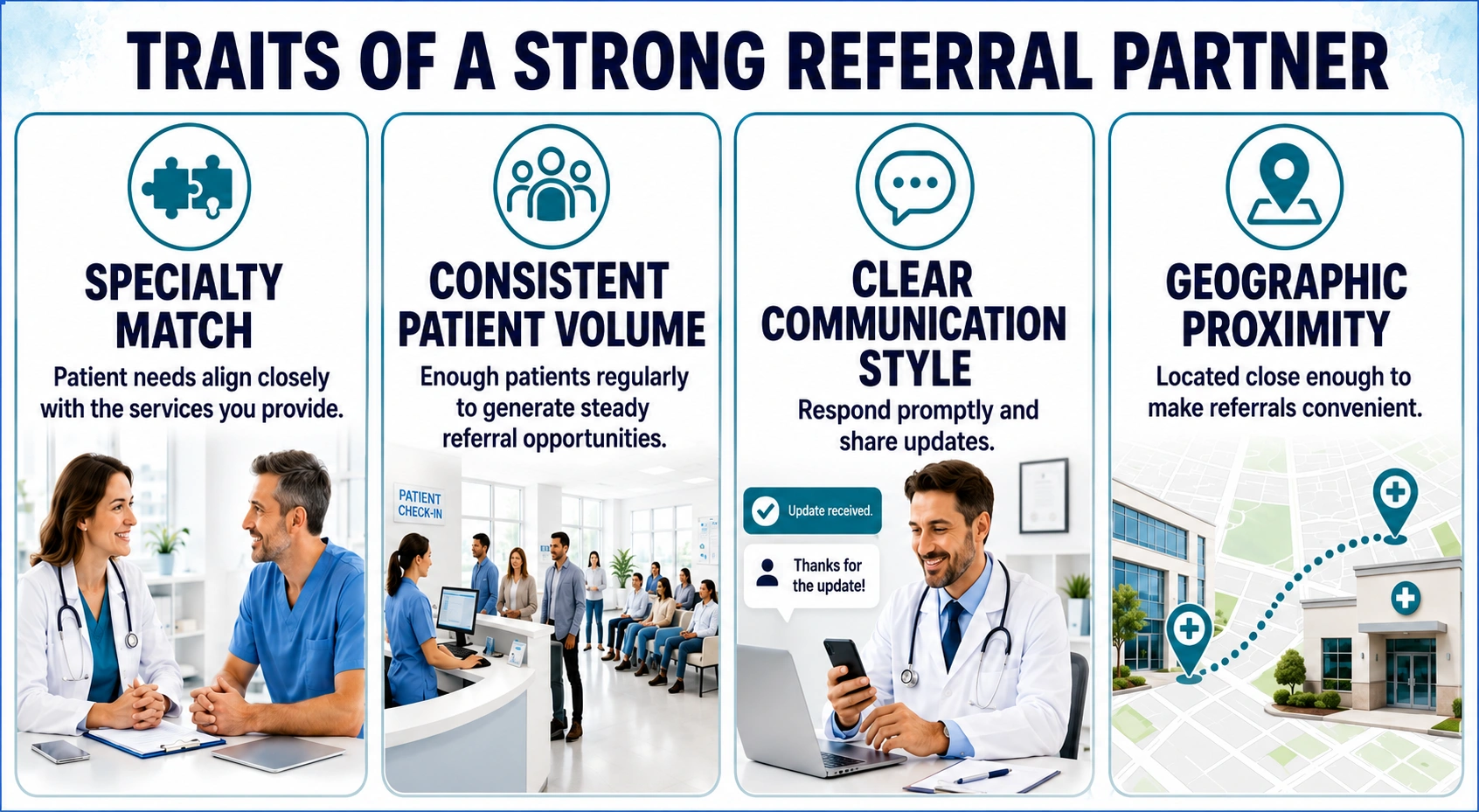
What Makes an Ideal Referral Partner
Remember that not every provider is worth the same level of outreach effort. Knowing what to look for in a referral partner helps you prioritize the relationships most likely to bring consistent, high-quality referrals.
Patient Referral Programs: Turning Patients Into Advocates
While physician-to-physician referrals build your professional network, patient referrals tap into a different source of growth entirely: the people who’ve already experienced your care firsthand. It is a structured system designed to encourage current patients to refer friends and family, turning satisfied patients into active promoters of your practice. Building this effective program comes down to a few practical elements, such as:
Designing the Right Incentive
The right incentive matters for both effectiveness and compliance. Many practices favor non-cash rewards such as branded merchandise, wellness perks, or service upgrades, while others use gift cards or service discounts that increase in value with each successful referral. Since incentive rules can vary depending on whether patients are covered under programs like Medicare or Medicaid, it’s worth having healthcare compliance counsel review the program before launch to ensure it aligns with the Anti-Kickback Statute and AMA guidance.
Tracking Referrals Accurately
Without proper tracking, it’s nearly impossible to know which patients are driving new business. So, practices typically use one or more of the following: unique referral codes assigned to each patient; UTM-tagged booking links shared via email or text; QR codes on referral cards or in-office signage; or a simple “How did you hear about us?” field at booking or check-in.
Training Front-Desk Staff to Ask
This is the detail most practices miss. Referral programs often underperform not because patients are unwilling to refer, but because no one asks them to. Make sure to train the front-desk and reception staff to mention the referral program at checkout, especially after a positive visit. This will turn a passive program into an active one.
Timing the Ask
The best time to ask for a referral is immediately after a positive experience, when patients are most likely to feel goodwill toward the practice. If you wait too long, even a few weeks, it will often cause that momentum to fade, so build the ask into your checkout or follow-up process rather than treating it as an afterthought.
Referral Marketing Tactics for Healthcare Practices
Other than physician liaison visits and patient referral programs, a broader set of channel and messaging tactics can support both referral streams at once.
Multi-Channel Promotion
Referral cards, in-office signage, targeted email campaigns, and social media posts, like LinkedIn for physician audiences and Instagram for patient-facing content, all help keep referrals top of mind. A “Refer a Friend” widget on your website gives patients a clear, always-available path to refer someone.
One-Click Sharing Paths
Reducing friction increases follow-through. Pre-written WhatsApp messages, one-click email referral buttons, and SMS links let patients or partners share your practice in seconds, rather than requiring them to draft something from scratch.
Tools and Technologies to Support Field Marketing
Healthcare-Specific CRM Systems
A systematic literature review of CRM systems in healthcare environments found that these platforms improve patient relationship management, streamline outreach workflows, and support referral tracking [Computer Standards & Interfaces, PMC [4]. This includes contact details, visitation history, referral patterns, and relationship insights. It also automates follow-up tasks, making outreach more efficient. For example, if a provider hasn’t been referred to recently, the system can remind your outreach specialist to reconnect. These kinds of CRMs are designed to meet privacy and compliance requirements, so that all data handling aligns with referral governance standards.
Mobile Apps for Field Reps
Field marketers use mobile apps to log visits on the go, capture meeting notes, track competitor activities, and plan efficient travel routes. This helps maintain productivity and ensures accurate, up-to-date information is always available. These apps also allow real-time syncing with CRM systems, so that every interaction and update is instantly recorded and accessible to the entire outreach team.
Data Analytics and Business Intelligence Tools
Data and dashboard tools help healthcare leaders see what’s working and what’s not. They track important details like which doctors send the most referrals, changes in referral trends, and how much revenue each relationship brings. This information helps practices make smart decisions, improve their strategies, and focus on the partnerships that create the best results.
Communication and Collaboration Platforms
HIPAA-compliant messaging and collaboration tools enable secure communication between outreach teams and referral partners. They make it easier to manage follow-ups, discuss cases, and coordinate administrative tasks efficiently within the referral network. Real-time communication also helps guarantee that no referral opportunities or critical updates are missed, improving overall coordination and response time.
How to Measure Success in Field Marketing: Key KPIs
Track success using KPIs like referral volume growth, active referring providers, conversion rate (referral-to-appointment), turnaround time, and revenue per referral. Also, monitor visit frequency, engagement levels, and provider retention to ensure your field marketing efforts consistently improve referral performance and long-term network strength.
Conclusion
For every growing healthcare practice, referrals are the foundation, and they require more than digital visibility. Field marketing adds that human element, which helps build the needed trust-based connections and fosters clear communication. As referral dynamics continue to evolve, taking a proactive and structured approach can make all the difference in building lasting provider relationships and consistent patient flow.If your practice is ready to strengthen its referral network, Your Medical Liaison can help you achieve exactly that. We build stronger provider connections, optimize referral workflows, and elevate your growth strategy with proven field expertise. Let us be the bridge that brings your next referral!
Citations
- Fattahi H, Ghasemi Seproo F, Fattahi A, Rostami V, Shokri A. “General Practitioners’ Perspectives on Barriers to Communication With Specialists in the Referral System: A Systematic Review and Meta-Synthesis.” Health Science Reports, PMC, 2025. https://pmc.ncbi.nlm.nih.gov/articles/PMC12098960/
- Savoy A, et al. “Consultants’ and Referrers’ Perceived Barriers to Closing the Cross-Institutional Referral Loop, and Perceived Impact on Clinical Care.” International Journal of Medical Informatics, PMC, 2023. https://pmc.ncbi.nlm.nih.gov/articles/PMC10863292/
- Bolton Saghdaoui L, Lampridou S, Tavares S, Lear R, Davies AH, Wells M, Onida S. Interventions to Improve Referrals from Primary Care to Outpatient Specialist Services for Chronic Conditions: A Systematic Review and Framework Synthesis Update.” PMC, National Library of Medicine, 2025. https://pmc.ncbi.nlm.nih.gov/articles/PMC12063302/
- Baashar Y, Alhussian H, Patel A, Alkawsi G, Alzahrani AI, Alfarraj O, Hayder G. “Customer relationship management systems (CRMS) in the healthcare environment: A systematic literature review.” Computer Standards & Interfaces, PMC. 2020. https://pmc.ncbi.nlm.nih.gov/articles/PMC7194637/
FAQs
How much does field marketing cost for a healthcare practice?
The cost depends on how many people are on your team, how often they visit providers, and where your practice is located. A good way to start is by testing it in one area or one type of service first. This way, you’re not spending a lot upfront, and you can see what’s actually working before expanding.
Can small or independent medical practices benefit from field marketing?
Yes, in fact, small practices often see the biggest impact since personalized outreach helps them compete against larger healthcare systems. A solo practitioner who shows up consistently and knows a referring physician by name will almost always outperform a hospital system’s generic mailer or quarterly sales rep visit.
What are the biggest mistakes healthcare practices make with their referral outreach programs?
Common mistakes include inconsistent visit schedules, no CRM tracking, unclear value messaging, and ignoring provider feedback completely. These gaps often lead to missed opportunities and a weakening of provider trust over time.
If I have a brand-new practice with zero referral history, will field marketing work for me?
Absolutely. Structured outreach and relationship-building from day one can establish strong referral networks surprisingly fast. In fact, starting without an existing reputation also works in your favor as you get to shape how referring providers perceive you before any assumptions take hold.
Can field marketing help my practice recover after losing a major referral source?
Yes, absolutely. When you lose a key referral source, the right move is to start reaching out to new providers, build those relationships, and avoid relying too heavily on just one or two sources. Practices that maintain a solid network of 8 to 10 active referral partners tend to handle disruptions much better.
What’s the easiest way to start a patient referral program without much setup?
Begin simple: add a “How did you hear about us?” field at booking, train front-desk staff to mention referrals at checkout, and offer one clear incentive. Expand into referral codes, QR codes, or tiered rewards later on once the basics are working consistently.
Do patient referral programs work differently than physician referral marketing?
Yes. Patient referrals rely on personal recommendations, incentives, and easy sharing tools like SMS or WhatsApp links. Physician referrals depend on consistent liaison visits, professional trust-building, and clinical value communication. Both strategies work best when run together, not as substitutes for one another.
How long does it take to see results from field marketing efforts?
Most practices start seeing early relationship traction within 60 to 90 days, though measurable referral growth typically takes 3 to 6 months. This is because trust with providers builds gradually through consistent visits, so patience and a steady visit cadence matter more than quick, one-off outreach pushes.
