
Social media has become one of the first places patients look when evaluating a medical practice, often before visiting the website or making a call. Instead of polished ads, people now want human, transparent, and informative content that helps them understand who will treat them, what to expect, and whether they can trust the clinic. For anxious or first-time patients, this makes the experience feel less intimidating and more familiar.
In this blog, we’ll explore how strategic, ethical social media marketing for medical practices can help build patient confidence and credibility well before a patient clicks “Book Appointment,” and why that matters for both patient outcomes and practice growth.
Social Media Marketing Patient Confidence OverviewSocial media helps medical practices create a positive first impression before patients book an appointment. Transparent provider information, educational content, authentic patient engagement, consistent communication, and accurate practice details help patients evaluate healthcare providers with greater confidence. A professional online presence also reduces uncertainty, strengthens credibility, supports informed healthcare decisions, and encourages meaningful patient relationships while improving visibility, engagement, and long-term practice growth through ethical, patient-focused marketing. |
Why Patients Research Providers Online Before Booking
Patients increasingly treat social media as a research tool before committing to a healthcare provider, and several concrete reasons drive this behavior, including:
Reducing Uncertainty and Feeling Safer
Most modern patients now research doctors online and compare options before deciding where to go for care. They check social media profiles, photos, and bios to answer a simple question: “Can I trust this person with my health?” A transparent, up‑to‑date social presence makes that decision feel less risky.
Looking for Real-World Social Proof
People often rely on reviews and public feedback when choosing a healthcare provider. Genuine testimonials, comments, and conversations on social media can feel like personal recommendations from other patients. Strong patient engagement on social media, including reviews, comments, and meaningful interactions, reassures prospective patients that others have had positive experiences with the practice, making them feel more confident about booking an appointment.
Checking Communication Style and Personality
A website rarely shows how a doctor actually talks to patients. In such a situation, social media content, including short videos, Q&As, reels, and stories, reveals tone, empathy, and clarity. In fact, as per a study published in the NIH, professional, respectful communication online increases patient trust, while poor behavior erodes it. Patients want to feel, “This doctor will listen to me and explain things in a way I understand,” before they book. This can be achieved only through social media marketing tactics.
Judging Expertise Through Educational Content
Educational content is one of the most valuable uses of social media for medical practices, allowing providers to demonstrate expertise while helping patients better understand their health concerns. When a clinic consistently posts FAQs, explainer videos, and evidence‑based tips, it signals real expertise, not just marketing copy, making patients more comfortable choosing that practice.
Evaluating Professionalism and Ethics
Healthcare is a high-stakes decision, and patients look for signs that a provider respects privacy, avoids exaggerated claims, and follows ethical standards. Authoritative guidance on digital behavior shows that professional, boundary-aware social media use is essential for maintaining confidence in doctors and clinics. A clean, responsible feed reassures patients that their data, dignity, and safety will be taken seriously.
Comparing Options Quickly and Conveniently
From the patient’s perspective, social media is a convenient way to compare clinics, view facilities, meet staff, and explore booking options. As a result, social media for medical practices helps patients evaluate providers and gather important information before making a healthcare decision. This easy access encourages deeper research and makes social platforms a practical decision-making tool, not just a place for ads.
What Makes Patients Feel Comfortable Before Booking?
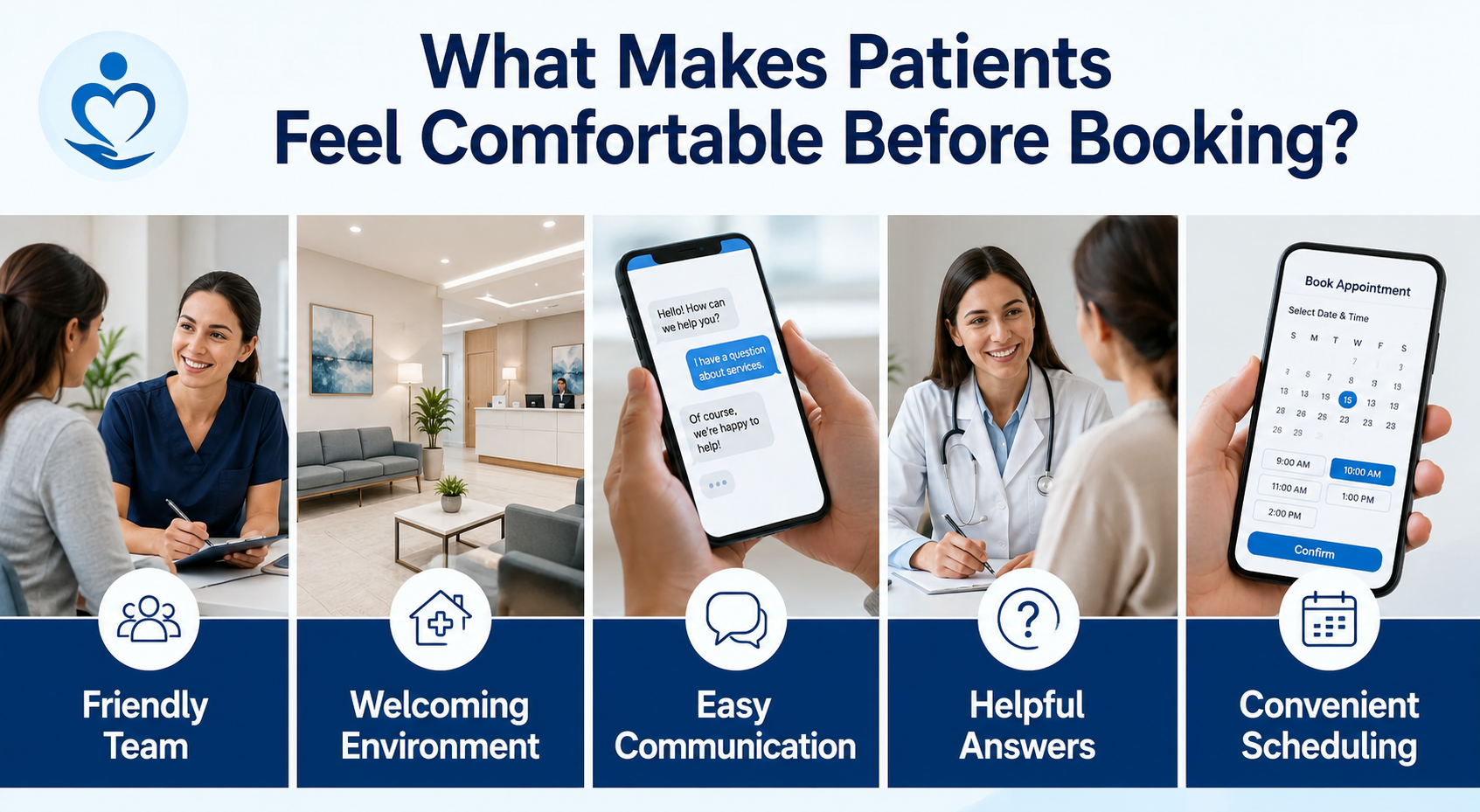
Before booking an appointment, patients look for signs that help them feel more comfortable with a medical practice. Their first impressions and online experience often influence whether they feel ready to schedule a visit.
|
Strengthen your healthcare social media presence with strategic marketing that builds patient confidence, increases engagement, and helps grow your practice online! |
How Consistency and Transparency Foster Confidence
Consistency Improves Patient Confidence
Healthcare information should be the same and correct on websites, doctor directories, and social media platforms. This helps patients check provider details and make better choices. Accurate information also reduces confusion before visits. In fact, HHS supports better health information systems so people can access and share reliable healthcare data more easily.
Provider Transparency Improves Patient Confidence
Clear provider information helps patients choose care with more confidence. This includes the doctor’s name, specialty, credentials, and practice details. Accurate profiles make it easier to know who the provider is before booking an appointment.
Trusted Information Improves Healthcare Credibility
Healthcare practices strengthen their credibility by sharing clear and accurate information that patients can verify through reliable sources. Helpful health content on social media can explain conditions, treatments, and care choices in simple ways, making it easier for patients to understand their options and make informed healthcare decisions.
Clear Policies Strengthen Patient Relationships
Clear healthcare policies help patients understand how a practice works before they get care. These policies explain privacy, communication, and patient rights. Being open about them reduces confusion.
Conclusion
A trusted online presence helps healthcare practices reach more patients and grow. Your Medical Liaison offers marketing services made for healthcare providers. We help improve online visibility, communication, and patient engagement so practices can connect with people in a meaningful way while continuing to focus on quality care.
|
Grow your healthcare practice with Your Medical Liaison. Connect with more patients and create a stronger digital presence today! |
FAQ’s About Social Media Marketing for Medical Practices
Should every medical practice have a social media policy?
Yes. A social media policy helps doctors and staff know what they can share online. It protects patient privacy, keeps information accurate, and helps everyone communicate in a professional and respectful way.
Can medical practices reply to patient comments on social media?
Yes, but they should be careful. Medical practices can thank people for positive comments or answer general questions. They should never share personal health information or discuss a patient’s private medical details online.
What social media mistakes should medical practices avoid?
Medical practices should avoid sharing incorrect information, posting too rarely, ignoring patient questions, using misleading claims, or sharing private patient details. Clear, accurate, and respectful content helps create a better online experience for everyone.
How long does it take to see results from healthcare social media marketing?
Results can take a few months, depending on how often a practice posts and connects with people. Regular, helpful content can increase visibility, attract more patients, and improve engagement over time.
How can medical practices measure social media marketing success?
Medical practices can measure social media success by checking likes, comments, followers, website visits, and appointment requests to see if their posts are reaching and attracting patients.
