
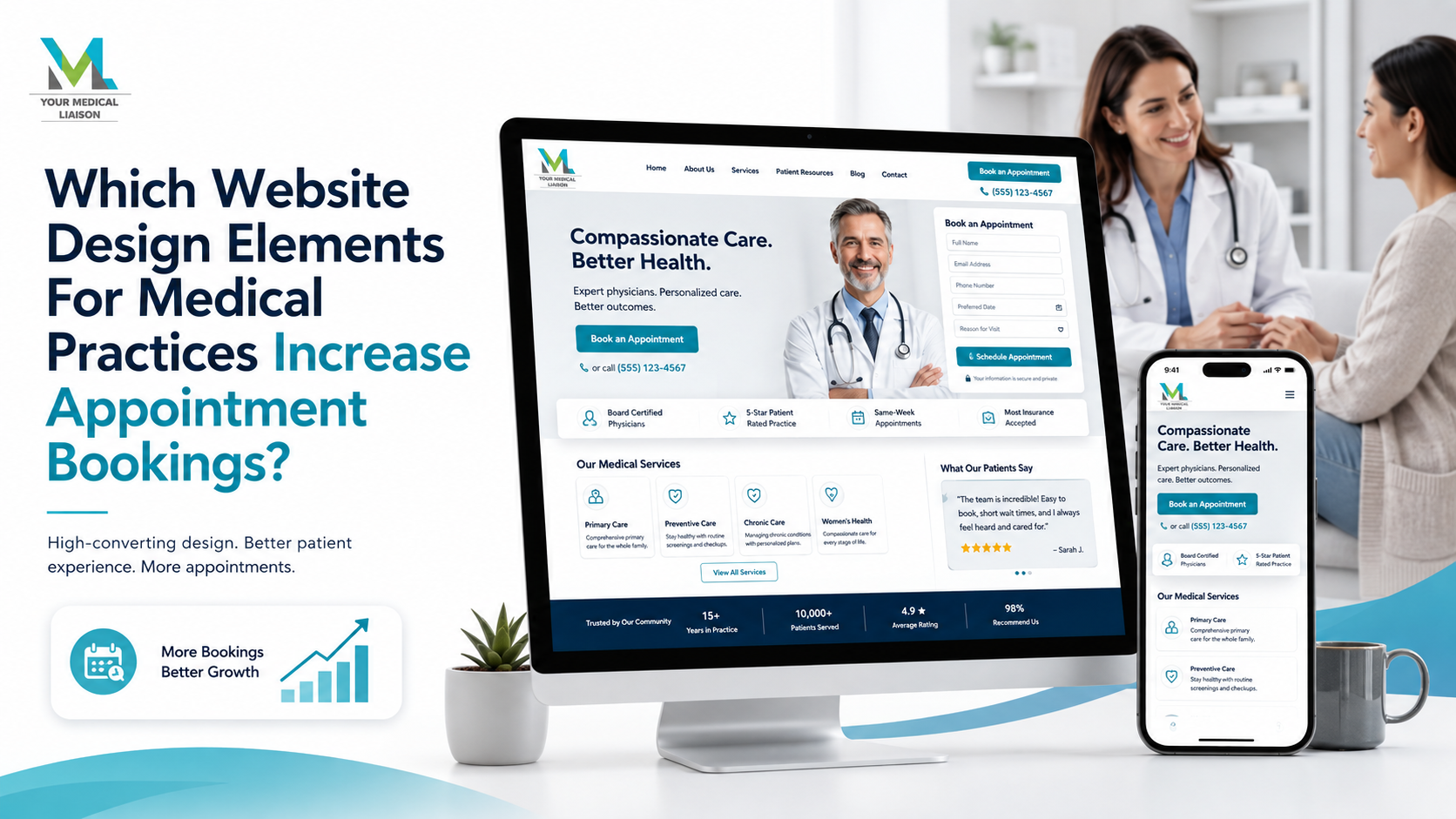
Your medical practice can invest heavily in SEO, advertising, and referrals, but if your website doesn’t give prospective patients the confidence to take the next step, that investment isn’t working as hard as it should.
For physicians and functional and integrative medicine providers in particular, a website has to do more than look professional. It needs to quickly answer the questions patients are asking: Can this provider help me? Can I trust them? What will my experience be like? And how do I get started?
The most effective medical practice websites remove uncertainty at each of those moments. In this guide, we’ll look at the elements of website design for a medical practice that help turn more qualified visitors into appointment requests, and where practices commonly lose potential patients along the way.
Medical Website Design OverviewEffective medical website design combines credible provider information, detailed service content, transparent practice details, and intuitive appointment pathways. Patient-friendly navigation, accessible interfaces, mobile optimization, smart forms, real-time availability, and clear booking confirmations can improve the scheduling experience. Regular updates, analytics, accessibility, professional visuals, and relevant digital features further support usability. For functional and integrative medicine practices especially, where treatment philosophies, longer consults, and cash-pay services require more explanation than a standard primary care visit, these elements do more than inform; they help the right patient recognize fit before they ever pick up the phone. Together, these elements help medical practices establish credibility, guide informed patient decisions, strengthen engagement, and encourage more completed appointment bookings. |
Which Website Features Build Trust and Encourage Patients to Book
Several design choices influence how patients evaluate a practice online and proceed with scheduling. Here are the key ones:
Clear Provider Profiles That Establish Expertise
A strong website design for a medical practice should provide dedicated profiles highlighting each provider’s qualifications, certifications, specialties, and clinical experience. A 2021 study published in the Journal of General Internal Medicine analyzed 5,004 provider biographies across 523 U.S. health systems and found that 83.6% included medical education and 81.4% featured provider photos.[1] Descriptive headings, approachable biographies, and updated credentials help patients understand clinicians’ expertise and make informed decisions before booking appointments. For functional and integrative medicine providers, going beyond credentials to explain a provider’s treatment philosophy and approach to care matters just as much, since patients are often choosing a philosophy of care, not just a specialty.
Detailed Service Pages That Answer Patient Questions
Dedicated service pages form an important part of website design for a medical practice, particularly for healthcare decisions that require clear and trustworthy information. Explain what each service addresses, who may benefit, and what patients can expect during their visit. Use medically accurate, patient-friendly language with descriptive headings and relevant FAQs. For functional and integrative practices, this means going further than a general description of “hormone therapy” or “chronic fatigue treatment”; explain who the service is for, what makes a root-cause or whole-person approach different, and whether a first visit is a discovery call, an extended new-patient consult, or a diagnostic workup. This structure helps visitors understand your care options before scheduling, and helps the right patient recognize fit before they ever reach a booking form.
One pattern we frequently see on functional and integrative medicine websites is service pages that describe treatments in clinical detail but never say who the treatment is actually for or what results patients might reasonably expect. That gap creates hesitation at exactly the moment a visitor is deciding whether to keep reading or leave.
Streamlined Appointment Booking From Key Pages
Effective medical website design services should connect relevant provider and service pages with appropriate appointment options. Use clear booking buttons, concise forms, simple field instructions, and immediate confirmation messages. Ensure the scheduling process functions consistently across desktop and mobile devices. For practices offering both a free discovery call and a paid new-patient consult, be explicit about which one a visitor should choose and why; ambiguity at this step is one of the most common places qualified visitors quietly leave the site. Connecting information directly with the relevant booking pathway helps patients move efficiently from evaluating care to requesting an appointment.
Trust-Building Information That Supports Decisions
Include practical details such as accepted insurance, payment information, location, opening hours, contact options, new-patient requirements, and genuine patient reviews. For functional and integrative medicine, this section carries extra weight because insurance and payment questions are often more complicated than in conventional care, many services are cash-pay or only partially covered, and patients frequently hesitate to book simply because they’re unsure what something will cost. According to NHS England’s 2023 GP Patient Survey, 60.7% of patients had tried to use their GP practice website to access information or services, while 64.8% of those users found the website easy to use.[2]
This data speaks to general website usability and patient behavior, not appointment conversion specifically, but it does reinforce that a meaningful share of patients now expect to self-serve basic answers online before calling or booking. Keep this information accurate and consistent across your website, updating it whenever practice details change. A reliable website design for a medical practice should also explain what patients need to bring and how they can prepare for their visit, giving them useful information before scheduling.
How Can Medical Websites Make Online Appointment Booking Easier
A smoother booking journey depends on several technical website features working together; here are the key elements that make online scheduling easier:
- Connect Service Pages Directly to Relevant Appointments: Give every major service its own scheduling pathway so patients can select the appropriate appointment without starting their search again. Preselect the relevant service within the booking interface when possible, reducing manual choices. This approach also helps practices route patients to the correct appointment type, provider, duration, or location based on their initial selection.
- Use Smart, Minimal Booking Forms: Structure forms around the information the practice genuinely needs to schedule care. Use conditional logic to reveal service-specific questions only when necessary, rather than presenting every patient with the same long form. Support browser autofill for appropriate fields and preserve entered information after validation errors. These techniques reduce repetitive data entry and improve completion efficiency.
- Provide Real-Time Appointment Availability: Display current scheduling data directly within the website so patients can select from genuinely available slots. Allow filtering by provider, location, appointment type, or date when the practice offers multiple options. Synchronizing the website with the practice management or scheduling system helps prevent outdated availability and reduces conflicts between online bookings and appointments handled through other channels.
- Design the Booking Flow for Mobile Devices: Treat mobile scheduling as a primary experience rather than simply shrinking the desktop interface. Arrange fields vertically, use suitable input types for dates and contact details, maintain sufficient touch targets, and keep essential actions visible without excessive scrolling. Test the complete workflow across common screen sizes to identify layout, interaction, and readability issues.
- Provide Immediate Confirmation and Next-Step Information: Give patients a definitive status immediately after they submit an appointment. The confirmation should identify the selected service, clinician, date, time, location, and reference details where applicable. If the practice requires approval, communicate that status instead of presenting the request as confirmed. Provide relevant preparation instructions and explain how patients can modify or cancel the appointment.
For practices looking to implement these elements comprehensively, a medical website design company can align the visual structure, technical functionality, and patient journey around the practice’s specific needs.
Measuring Whether Your Website Is Actually Converting
Design and content decisions should ultimately be judged by whether they turn visitors into booked patients, which means measurement has to be part of the website, not an afterthought. Track appointment-form starts versus completions, phone calls generated from the site, consultations actually booked, conversion rate by traffic source, and, where possible, cost per acquired patient.
This is where many practices lose visibility into their own marketing spend: they can see traffic increasing without ever knowing whether that traffic is converting into revenue-generating patients. A website redesign or SEO investment that doesn’t move these numbers isn’t working as hard as it should, regardless of how the site looks.
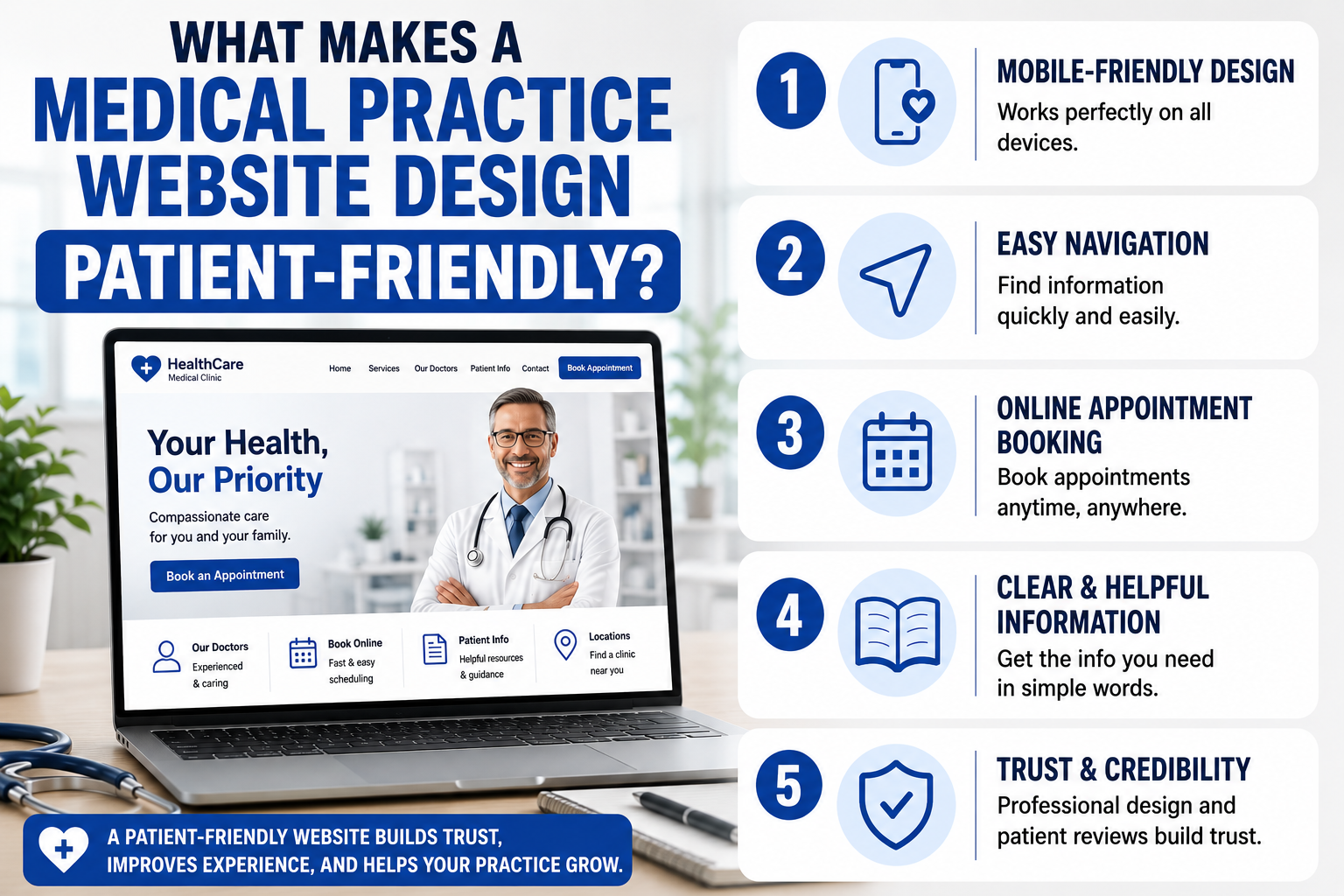
Key Features of a Patient-Friendly Medical Practice Website
A patient-friendly medical website makes finding information, booking appointments, and accessing care simple and stress-free. Here’s what it includes:
5 Signs Your Medical Website Is Losing Potential Patients
Your medical website should do more than explain your services—it should make it easy for potential patients to understand their options, trust your providers, and take the next step. If the patient journey is unclear or difficult, visitors may leave before ever contacting your practice.
Here are five signs your website may be costing you potential patients:
- Your appointment button is difficult to find
Patients should not have to search your website to figure out how to book an appointment. Clear, prominent calls to action should be available throughout the patient journey. - Your service pages explain treatments, but not who they are for
Listing treatment details is helpful, but patients also need to understand whether a service is relevant to their symptoms, concerns, or goals. - Your provider pages focus only on credentials
Education and qualifications build credibility, but patients also want to understand a physician’s approach to care, experience, philosophy, and what they can expect during an appointment. - Booking an appointment on mobile is more difficult than on desktop
Many potential patients search for healthcare providers on their phones. A complicated mobile booking process can create unnecessary friction and lead to abandoned appointments. - You don’t know how many website visitors become leads or patients
Without proper conversion tracking, it is difficult to determine which pages, campaigns, or marketing channels are actually generating appointment requests and patient inquiries.
Conclusion
Effective medical website design goes beyond appearance; it should create a credible, accessible, and conversion-focused experience for patients. At Your Medical Liaison, we combine healthcare expertise with strategic website solutions to help practices present their services clearly and simplify the patient journey. We look at your website as part of the complete patient-acquisition journey, not a standalone design project. From website strategy and SEO/AEO to content, reputation, and conversion tracking, our goal is to make your marketing work harder while requiring less of your time. With our approach, medical practices can strengthen their digital presence, improve patient engagement, and bring in more of the right patients while reclaiming time otherwise spent worrying about marketing.
Is Your Website Turning Visitors Into Patients?
Find out where your medical website may be losing potential patients and uncover opportunities to improve conversions, strengthen the patient journey, and generate more qualified inquiries.
FAQs About Medical Practice Website Design and Appointment Bookings
How fast should a medical practice website load?
Aim for fast loading across devices, especially mobile. Slow pages can interrupt browsing, increase abandonment, and prevent patients from reaching important practice information.
Should a medical practice website include online chat?
Live chat can help answer administrative questions, guide visitors to appropriate resources, and connect patients with staff without presenting chat as a substitute for clinical advice.
Is accessibility important for medical practice websites?
Yes. Accessible websites help people with disabilities navigate, read, and interact with digital healthcare information, supporting equitable access and improving the overall user experience.
How often should a medical practice website be updated?
Review website information regularly and update content whenever services, providers, policies, hours, technology, or practice details change. Schedule periodic audits to identify outdated information.
Can video improve a medical practice website?
Relevant videos can introduce providers, explain practice processes, or demonstrate non-clinical information. Keep videos concise, professionally produced, accessible, and supported by equivalent written information.
Source
[1] National Library of Medicine – The Missed Opportunity of Primary Care Providers’ Online Biographies
[2] NHS England – GP Patient Survey 2023
