
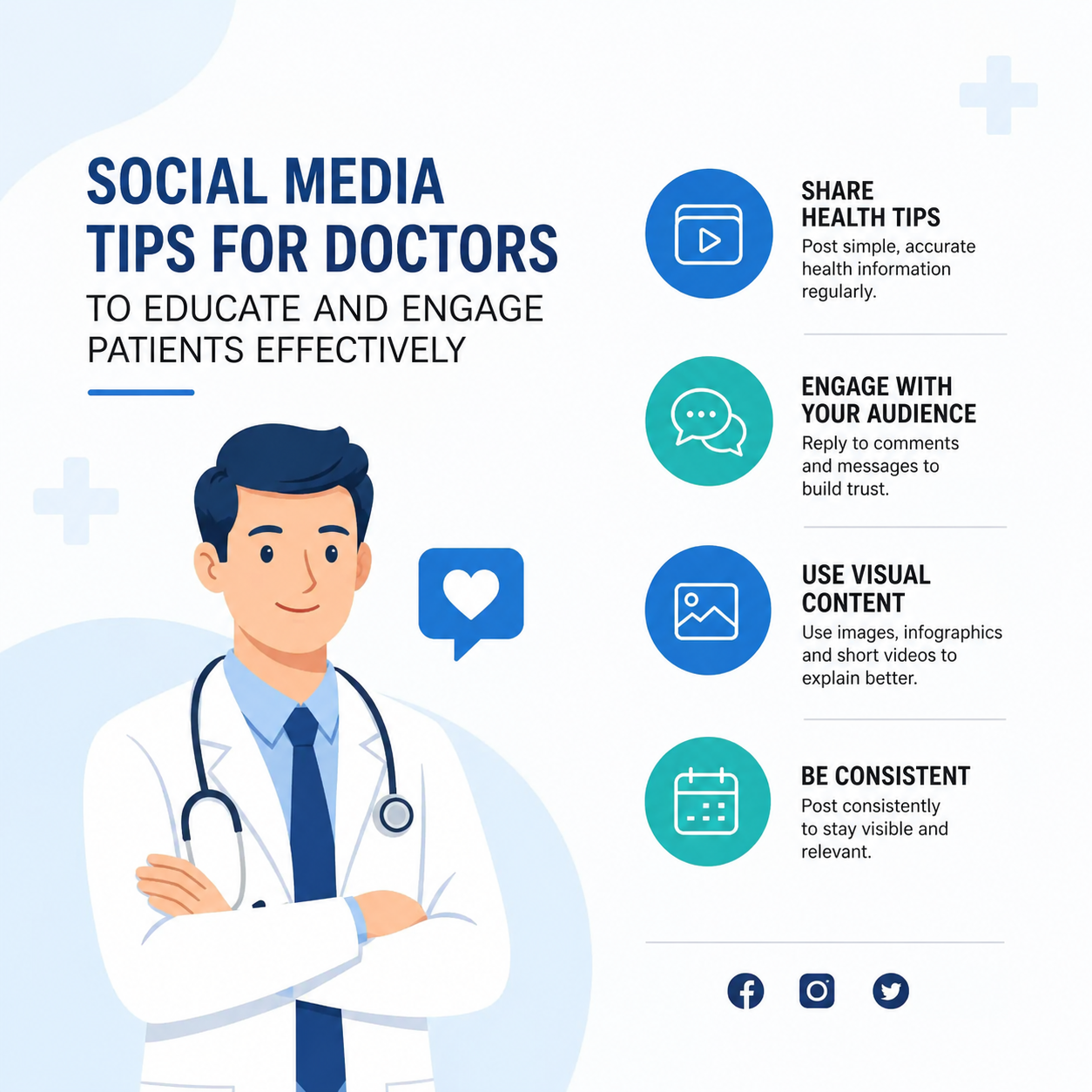
Your patients are already scrolling Instagram, watching TikTok health reels, and Googling symptoms at 2 AM. So why aren’t you showing up in that feed with accurate, trustworthy info? To address this, we have come up with some genuine social media tips for doctors that actually work.
As a doctor, your voice carries serious weight online. As per a study published in the NCBI, 24% of physicians cite patient education as their primary social media goal, and platforms like Instagram and YouTube are proving to be genuinely powerful tools for delivering credible health content.
But posting without a strategy can limit your impact and make it harder to build trust with the right audience.
This guide breaks down exactly how doctors can use social media to educate patients, build real trust, and create a community that keeps people coming back, for the right reasons.
Health Education and Engagement SummarySocial media empowers doctors to combat misinformation, engage patients, and drive practice growth. While platforms like Facebook, YouTube, and Instagram expand reach, healthcare professionals must maintain strict professional boundaries, protect patient privacy, and avoid direct online diagnoses. By adopting strategic content such as myth-busting videos, preventive screening guides, and evidence-based research, doctors can effectively educate communities, foster trust, and seamlessly connect with patients seeking reliable healthcare guidance. |
Why Doctors Should Use Social Media for Patient Education?
Patients Search, Doctors Guide
The National Academy of Medicine says over 80% of internet users aged between 18 and 49 seek health information from social media. Without doctors being online, patients turn to unverified sources, making a doctor’s presence essential.
Social Media Helps Patients Follow Treatment Plans
Doctors who educate on social media don’t just inform, they influence action. Patients who follow their physician online are more likely to stick to prescribed treatment plans, leading to measurably better real-world health outcomes.
Builds Measurable Patient Trust
35% of patients choose a doctor based on their social media presence, and another 84% of people check their online reviews before booking any appointment. Broader research from the NIH also highlights that having an online presence of doctors is important. Visibility isn’t just marketing; it’s the first step in earning patient confidence.
Doctors Help Stop Health Misinformation
According to ASCO, over 60% of people encounter health misinformation online, but 73% trust doctors who are active on social media. Physicians who share accurate, evidence-based content don’t just educate; they protect patients from dangerous myths.
Choosing the Right Social Media Platforms for Medical Outreach
70.7% of doctors use Facebook, which makes it the best platform for them to reach patients aged 30–64 with health education, group discussions, and clinic updates.
YouTube
According to Pew Research, 74% of adults use YouTube for health information, and 52% make health decisions based on it. It’s perfect for doctors explaining treatments and building long-term authority.
Instagram has the highest healthcare engagement at around 3.7%, NIH study shows. It’s ideal for dermatology, dentistry, and aesthetics doctors targeting patients under 40 through visuals and Reels.
TikTok
TikTok users have spent over 630 million hours watching only doctor videos, but the study from NIH shows the 98% of top health content on this platform is misleading about wrong treatments, so real doctor-skilled information is essential here.
Over 1 million doctors use LinkedIn, where the healthcare content based on the research of NIH says they gets upto 20% more engagement. It’s the best platform for research sharing, referrals, and building professional authority.
These marketing tips for doctors will help you build a stronger online presence on different social media platforms and attract the right patients.
Want to know which of these platforms works perfectly for you? Contact our social media team experts for better clarity.
Social Media Tips for Doctors for Professional Presence
Here are focused points on how doctors can educate patients effectively through social media:
Define Your Professional Identity Clearly
Clearly state your name, specialty, qualifications, and purpose. Patients should instantly understand who you are, what expertise you offer, and what type of health information they can expect from your content.
Follow the 80-15-5 Content Rule
Keep 80% of content educational, 15% personal or behind-the-scenes, and only 5% promotional. This balance maintains credibility while helping audiences connect with you authentically.
Avoid Giving Direct Medical Advice
Using social media for general education instead of individual checkups. It is better for a physician to never diagnose conditions or suggest treatments online. Instead, you can always remind users to see a doctor for personal medical care.
Maintain Institutional Policy Compliance
To maintain institutional compliance, every post must follow patient privacy laws, workplace rules, and official regulations. Doctors should also follow HIPAA and applicable state privacy laws by never sharing identifiable patient information, images, or case details without written consent.
Disclose Conflicts of Interest
When talking about healthcare products, drugs, or brands, always openly state any sponsorships, financial ties, or professional partnerships. Being transparent protects public trust and makes your educational content more credible.
In addition to social media, there are several other factors like SEO, CRM systems, analytics etc, of sales funnel for doctors to attract and retain patients that you can understand in our blog.
5 Social Media Rules Every Doctor Should Follow
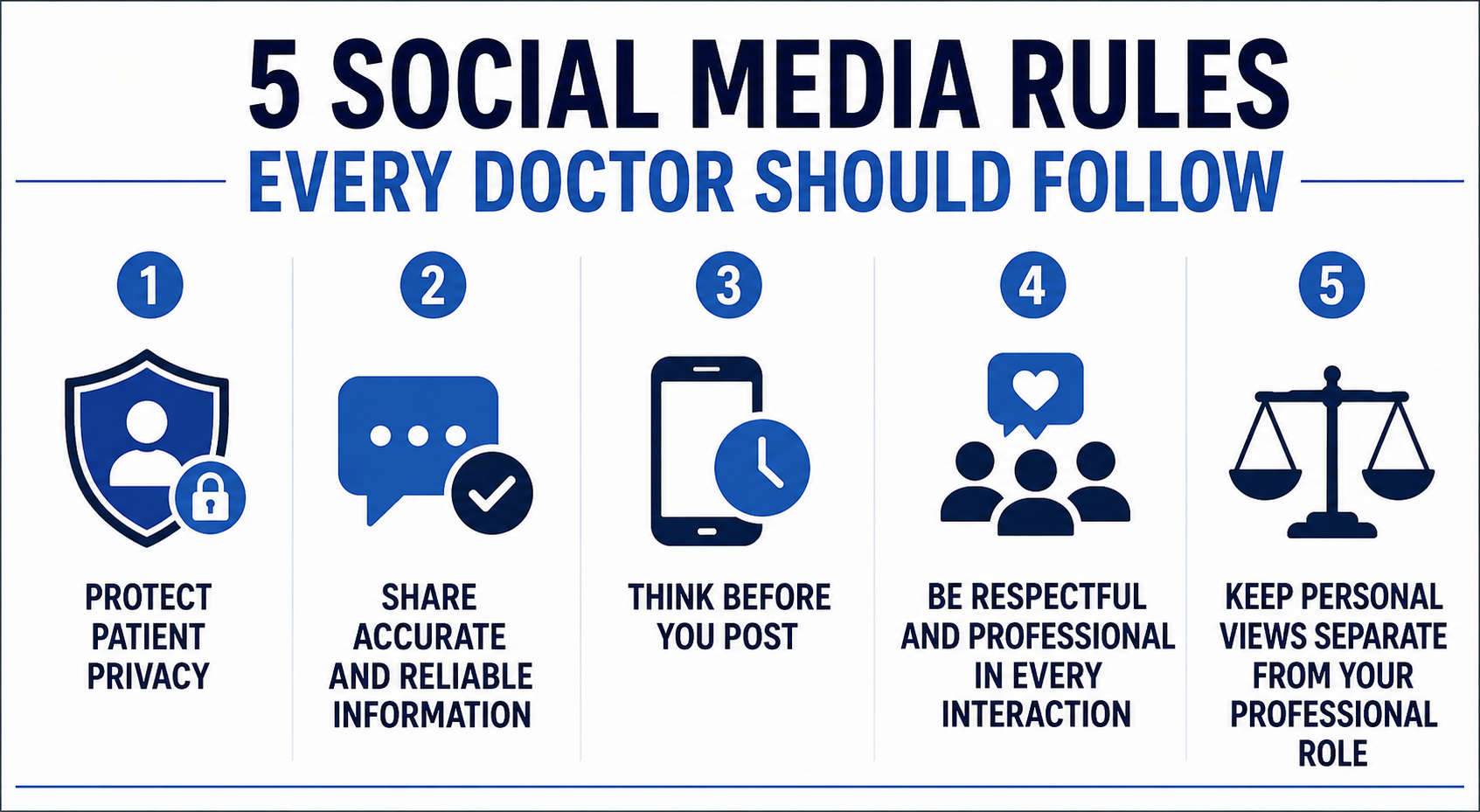
A good social media presence will help doctors to connect with people, share health tips, and build trust. Following the right rules makes online communication clear, professional, and effective.
Content Strategies to Educate Patients
Simplify Your Writing
Medical jargon quickly loses a patient’s attention. Keep your writing simple so someone with zero medical background understands it instantly. Use short sentences, plain language, and everyday comparisons instead of heavy medical information.
Use Short Educational Videos
Visual and audio explanations help patients to understand information far better than long, text-heavy posts. So, use brief, 60-90-second videos, and focus on explaining just one symptom, or sharing one prevention tip.
Answer Real Google Searches
Focus on the exact questions your patients are already searching for online. Address everyday symptoms, common side effects, and popular health myths. Meeting patients at their actual point of confusion always outperforms focusing strictly on clinical or textbook priorities.
Separate Education from Diagnosis
Keep your social media content strictly educational and never offer individual medical advice. Always include a clear disclaimer stating your posts are for general information only. This simple step protects you legally while guiding educated followers to book actual clinical appointments.
Engagement Tactics for Better Interaction
Use Polls and “This or That” Questions
Instagram and Facebook polls require zero effort but drive massive engagement. Ask simple questions like “Do you track your steps?” Followers vote with a single tap, making them feel connected while revealing exactly what topics your audience wants to see next.
Host Short Live Q&As
Going live for just 15 minutes creates a real-time connection that regular posts cannot match. A regular slot like “Ask Me Anything Fridays” builds a loyal audience. You can answer general questions live, showing you are approachable without giving specific medical advice.
Respond To Every Comment
Do not just post and disappear. Replying to comments tells social media algorithms to boost your post, and it shows followers a real human is listening. A friendly reply builds trust and shows potential patients exactly how much you care.
Team Up with Other Experts
One of the most effective ways is to collaborate with specialists in complementary fields, like a pediatrician partnering with a child psychologist. This helps share your content with each other’s audiences. It also gives patients a well-rounded look at health topics, making your posts highly shareable.
Jump on Trending Health News
When a medical topic or seasonal illness spikes in the news, post about it immediately. People are already searching for answers online. Sharing timely, expert facts right in that moment builds immense trust and quickly expands your organic reach.
Dealing with Information & Misinformation
To effectively educate and engage patients on social media while dealing with misinformation:
- Post consistent health advice backed by the CDC, WHO, and medical research. Use clear, plain language so your patients can easily understand the concepts and trust your page.
- Start your posts with accurate medical facts. Briefly break down why a specific myth is wrong, then quickly repeat the correct information to make sure the facts stick.
- When followers share incorrect claims, validate their worries first. Respectfully pivot to the actual clinical facts, keeping your tone supportive rather than dismissive.
- Use clear diagrams or video breakdowns for complex medical ideas, and reply promptly when patients ask for more guidance.
This approach balances scientific accuracy with human connection, making doctors effective counterweights to health misinformation on social media.
Conclusion
Till now, you must have understood how sharing clear, evidence-based content, through the right social media platform, helps medical professionals empower their community. So to increase the digital reach of your expertise, Your Medical Liaison offers expert patient engagement and healthcare marketing solutions. Our team reliably showcases how social media management and referral development help practices boost visibility, connect with the right patients, and achieve measurable growth.
So, don’t let valuable medical insights stop at your clinic doors. Join Your Medical Liaison today!
Frequently Asked Questions
How often should doctors post on social media?
To maintain good visibility and patient engagement, you should post at least two to four high-quality posts per week.
How can doctors use patient feedback to improve educational content?
Patterns in comments and messages can reveal which explanations are helpful and which topics need further clarification.
How should doctors handle negative comments online?
You should stay professional and share clear, helpful facts instead of getting into confrontational discussions.
What is the best way to explain medical test results on social media without giving personal advice?
Explain what the test checks for and why doctors commonly use it, without discussing individual results.
Should doctors make their own posts or share other medical sources?
Do both. Creating your own posts shows your personal expertise, while sharing trusted sources builds extra credibility.
