
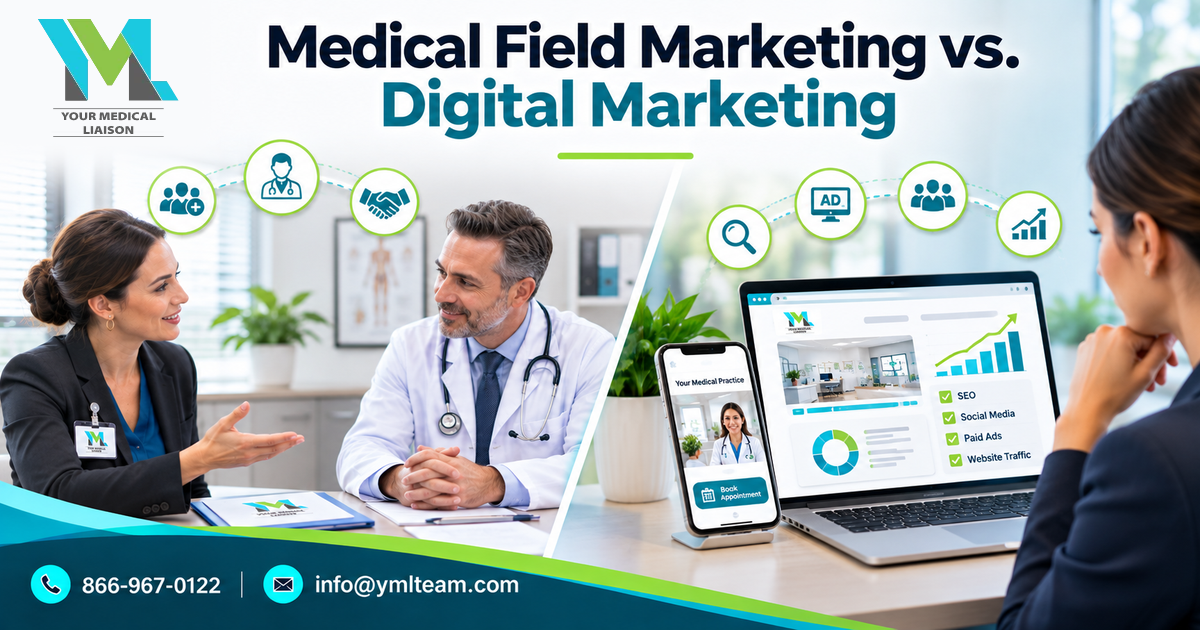
Medical practices must build visibility and credibility in an increasingly competitive healthcare landscape, where patients and referring physicians rely on different channels to find, evaluate, and connect with providers. Medical field marketing supports relationship-building through physician outreach, in-person engagement, referral networks, and community interactions. Meanwhile, digital marketing helps practices reach patients through search engines, websites, online content, and targeted campaigns. Both approaches serve distinct purposes, particularly when trust, clinical expertise, patient access, and referral growth influence practice development.
However, choosing where to invest needs understanding the practice’s growth objectives, target audience, referral patterns, and ability to maintain meaningful engagement. Here’s how each works, and which approach suits your practice better.
Understanding Medical Field Marketing and Digital Marketing
Medical field marketing
As an important part of B2B healthcare marketing, medical field marketing involves building a practice’s presence within its local healthcare community through professional relationships, referral connections, and community engagement. It helps medical practices establish connections with referring physicians, clinics, and other healthcare organizations while building familiarity with their services.
The American Medical Association’s Guide to Maximizing Physician Referral Strategies explains how practices can identify important referral sources, develop professional relationships, and improve communication throughout the referral process.[1]
Digital marketing
Medical digital marketing helps medical practices communicate the value of their care, explain their services, and address patients’ healthcare concerns through their online presence, making it easier for patients to understand their care options.
According to the American Medical Association’s guidance on building a digital footprint for physician practices, websites, search engines, online reviews, and social media help practices connect with prospective patients and communicate their expertise.[2]
Medical Field Marketing vs. Digital Marketing: Key Differences
Medical practices must build visibility and credibility in an increasingly competitive healthcare landscape. So, it is crucial to understand traditional vs. digital healthcare marketing, offering two distinct approaches to achieving this goal. Let’s get started by discussing what they are and how each one performs:
Point of difference |
Medical Field Marketing |
Medical Digital Marketing |
| Who does the marketing | Physician liaisons, territory managers, clinical specialists, key account managers, and medical science liaisons handle professional outreach. They meet healthcare professionals through in-person visits or scheduled virtual meetings. | In-house marketing teams, digital marketing specialists, or external agencies manage online campaigns across search engines, websites, email, social media, and digital advertising platforms. |
| Who it mainly targets | The primary audience includes referring physicians, medical specialists, nearby clinics, hospitals, and other healthcare professionals or organizations that may refer patients to the practice. Outreach is usually planned around relevant specialties, local referral opportunities, and existing professional relationships. | Patients searching for doctors, symptoms, treatments, clinics, and healthcare services are common target audiences. However, campaigns can also reach physicians through professional medical platforms, email, and specialized healthcare portals. |
| Primary strategic purpose | The primary purpose is to build professional relationships with referring physicians and strengthen the practice’s local referral network. This involves introducing the practice’s specialties and services, explaining referral processes, addressing questions, and maintaining connections through consistent follow-up visits. | The primary purpose is to help patients discover a doctor, hospital, clinic, or healthcare service online. It also provides relevant health information and encourages visitors to take the next step, such as calling the practice, submitting an inquiry, or booking an appointment. |
| Type of communication | Communication generally involves direct, two-way discussions. A representative can adjust the conversation according to the doctor’s specialty, clinical questions, patient needs, and previous experience with the product or service. | Most communication follows a one-to-many format. A single blog, advertisement, video, or email campaign can share the same information with a large audience simultaneously, although users can respond through enquiries and other interactive channels. |
| What is actually delivered | Common materials include practice and specialty introductions, physician referral directories, service brochures, referral forms, provider contact information, event invitations, and follow-up information. | Deliverables include SEO content, search advertisements, doctor profile pages, treatment and service pages, educational blogs, videos, social media posts, email campaigns, online booking systems, and inquiry-focused landing pages. |
| How trust is built | Trust develops through consistent professional interactions, scientifically accurate answers, reliable follow-ups, and useful service-related information. Being available to address a doctor’s questions also helps maintain professional credibility. | Patients evaluate a practice through the accuracy of its medical content, doctors’ qualifications, transparent service information, patient reviews, contact details, and ease of booking an appointment. Consistency across online platforms also supports credibility. |
Connecting Physician Outreach With the Patient Journey
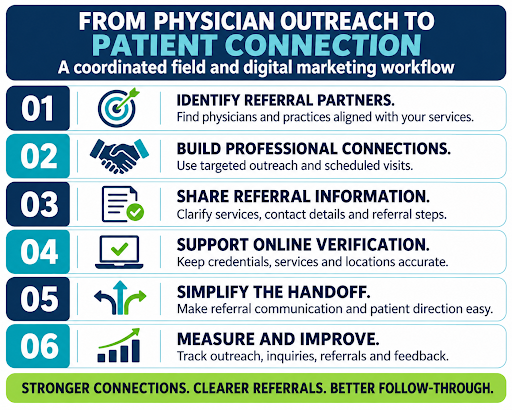
The following framework helps medical practices evaluate how effectively the field and digital marketing efforts can work together and helps identify gaps in the referral experience and improve patient access, communication, and referral coordination.
Want to build a stronger digital presence? Our team helps manage healthcare SEO, social media, Google Ads, reputation management, and websites to strengthen visibility and patient engagement.
How Should Medical Practices Choose Between Field and Digital Marketing?
When Is Field Marketing the Better Choice?
This approach deserves greater attention when a medical practice needs to strengthen professional relationships, improve referral coordination, or establish its presence within a healthcare community. However, field marketing can be particularly valuable in the following situations:
- When entering a new geographic market: Practices expanding into a new territory may benefit from identifying relevant physicians, clinics, and healthcare organizations before establishing a structured outreach plan to build professional familiarity within that area.
- When targeting a specific local community: If a practice wants to reach residents of a particular neighborhood, nearby workplaces, senior communities, or families, participating in local events and community health programs can help it connect with the people it wants to serve.
- When introducing a new service or specialty: If a practice adds a new treatment, diagnostic service, or specialty department, in-person outreach can help educate local physicians, potential patients, and community members about what it offers and who may benefit.
When Should Medical Practices Invest in Digital Marketing?
Digital marketing becomes particularly important when patients need to find a practice, compare available services, or access reliable information before making an appointment. It is worth prioritising in these situations:
- When patients actively search for healthcare services online: Practices that want to attract new patients beyond word-of-mouth referrals need a strong online presence. Local SEO and service-specific pages help patients find the practice when they search for relevant care in their area.
- When patients need information before booking: For unfamiliar treatments, specialized procedures, or services requiring preparation, practices can use website pages, FAQs, and educational videos to explain what patients can expect. This gives patients access to information at their own pace before contacting the practice.
- When the practice needs measurable marketing results: The digital marketing approach makes it easier to track website visits, appointment inquiries, calls, and campaign performance. This helps practices understand which channels are bringing patient inquiries and where their marketing budget is being spent effectively.
Conclusion
Choosing the right medical practice marketing strategies starts with understanding your practice’s goals and where support is needed. Your Medical Liaison offers customized healthcare marketing, combining physician liaison outreach with digital strategy, content, SEO, advertising, and reputation management. Our team handles implementation so you can focus on patient care. From strengthening referral relationships to improving online visibility, we help your practice build a marketing strategy that supports sustainable growth.
Are you looking to strengthen your physician referral network? Our physician liaison team builds referral relationships through targeted physician outreach, scheduled visits, and local healthcare networking. Let’s discuss your practice’s goals.
Frequently Asked Questions On Medical Field Marketing Vs. Digital Marketing
How can medical practices measure the ROI of field marketing?
Practices can track physician visits, new referral sources, referral volume, appointment conversions, and relationship growth to evaluate field marketing performance.
What digital marketing mistakes should medical practices avoid?
Avoid outdated website information, inconsistent business listings, misleading health claims, weak security practices, and campaigns without clear performance tracking.
How can a medical practice choose the right healthcare marketing agency?
Look for healthcare industry experience, transparent reporting, HIPAA-aware processes, relevant service expertise, and measurable strategies aligned with practice goals.
Can small medical practices benefit from healthcare marketing?
Yes. Small practices can use focused outreach, local search visibility, and targeted campaigns to compete effectively without extensive marketing resources.
How can medical practices maintain HIPAA compliance in digital marketing?
Protect patient information, obtain required authorizations, review advertising practices, and use appropriate safeguards when handling protected health information.
Sources:
[1] Private Practice Simple Solutions: A Guide to Maximizing Physician Referral Strategies
[2] American Medical Association: Draw patients to your practice with the right digital footprint
